
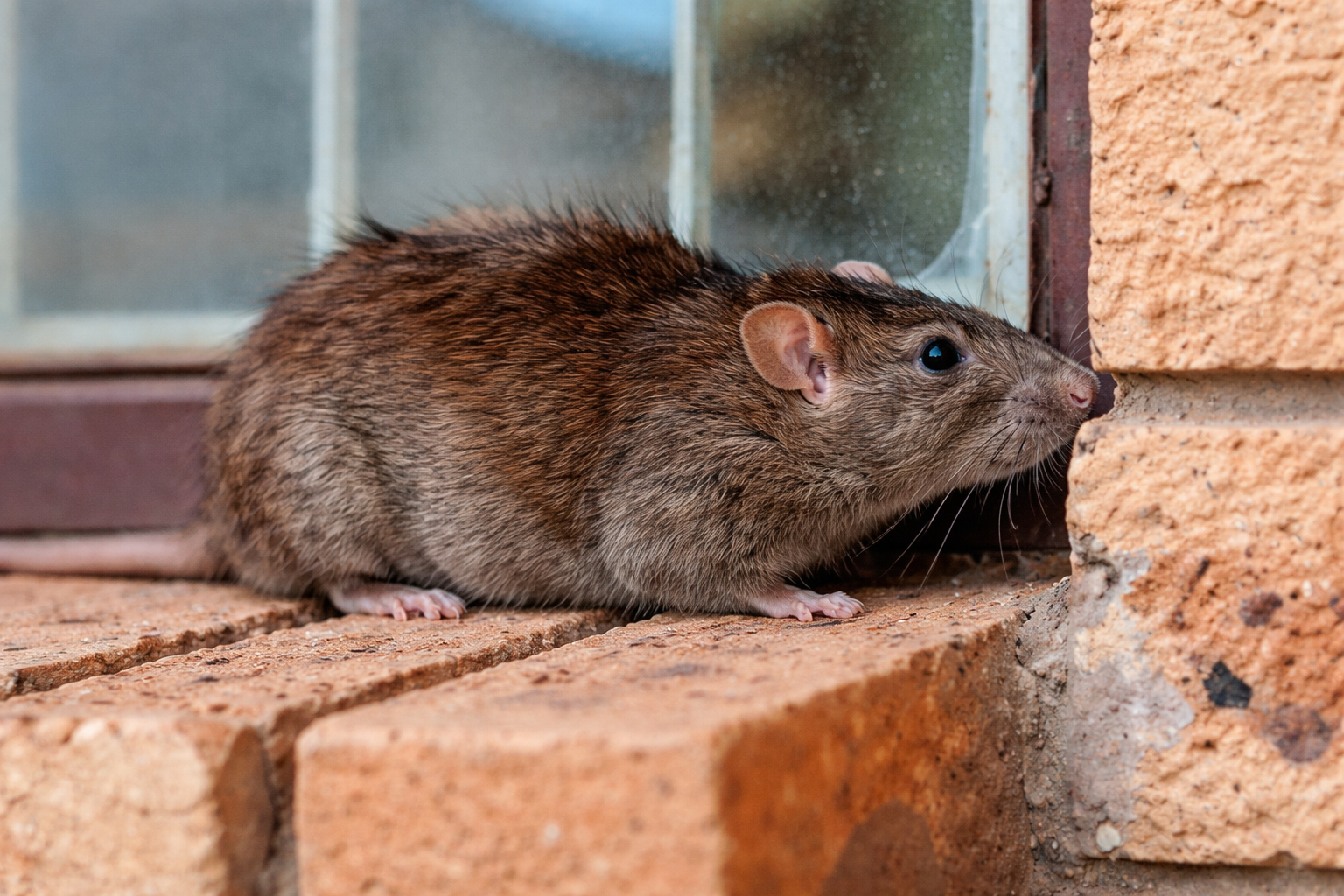
If you’re seeing signs of rats around your yard—droppings, burrows, or scratching noises—you’re probably wondering:
“Why are rats choosing my backyard?”
Rats aren’t random. They’re drawn to very specific conditions—and once those conditions exist, they tend to stay.
The good news is that rat problems are usually preventable once you understand what’s attracting them.
Learn more about how professional rat removal works:
Rat Removal in Oklahoma
Why Rats Choose Certain Backyards

Rats are simple in what they’re looking for. Every infestation comes down to three things:
- Food
- Water
- Shelter
If your yard provides all three—even in small amounts—it can quickly turn into a reliable nesting area.
In Oklahoma City, with our mix of older homes, mature trees, and nearby creeks and drainage systems, it’s especially easy for backyards to become ideal habitats.
The 3 Things That Attract Rats (And Where Most Backyards Go Wrong)
1. Food Sources (The #1 Driver)
Rats go where food is easy and consistent.
The most common backyard food sources include:
- Pet food left outside overnight
- Bird feeders and spilled seed
- Unsecured trash cans or loose lids
- Fallen fruit from trees
- Outdoor cooking areas with grease or food residue
Even small amounts of food, if available regularly, will train rats to return night after night.
2. Water Sources (The Hidden Factor)
Many homeowners focus on food—but water is just as important.
Rats only need small amounts, and they’ll take advantage of:
- Leaky hose connections or spigots
- Pet water bowls left out overnight
- Bird baths
- Poor drainage or standing water
- Air conditioning condensation lines
One of the biggest patterns we see in Oklahoma City:
homes that back up to creeks, drainage ditches, or greenbelts tend to experience significantly higher wildlife activity.
These areas act as natural travel corridors, giving rats:
- Reliable water sources
- Dense cover
- Easy movement between properties
Once food becomes available nearby, it’s very common for activity to spill into surrounding yards and homes.
3. Shelter and Harborage (Where They Live)
Rats prefer areas where they can stay hidden and protected.
Common backyard shelter includes:
- Overgrown shrubs and thick vegetation
- Woodpiles or stacked materials
- Yard debris or unused items
- Gaps under decks or sheds
- Openings along the foundation
These protected spaces allow rats to nest, reproduce, and stay close to food and water sources.

Even in well-maintained yards, rats tend to gather in predictable areas:
- Under decks and porches
- Along fence lines
- Near trash storage areas
- Around AC units and utility lines
- Along garden edges and dense landscaping
If you’re trying to locate activity, these are the first places to check.
Backyard Rat Prevention Checklist
If you want to make your yard less attractive to rats, start here:
✔ Keep trash cans sealed with tight-fitting lids
✔ Remove pet food and water at night
✔ Clean up fallen fruit and food debris
✔ Trim vegetation and reduce dense cover
✔ Store firewood at least 18 inches off the ground
✔ Eliminate standing water and fix leaks
✔ Use rodent-proof composting practices
✔ Block access under decks and sheds
✔ Keep bird feeders clean and minimize spillage
✔ Inspect your home regularly for entry points
Small changes here can prevent much bigger problems later.

Even if you haven’t seen one, rats leave behind clear evidence:
- Droppings (larger and thicker than mouse droppings)
- Burrows near foundations, fences, or landscaping
- Gnaw marks on wood, plastic, or wiring
- Grease marks along walls or common travel paths
- Scratching, movement, or activity at night
Not Sure If It’s Mice or Rats?
This is one of the most common questions homeowners have—and it matters, because the solution can be different.
If you’re unsure what you’re dealing with, here’s a clear breakdown of the differences:
Why This Is So Common in Oklahoma City
Certain local conditions make rat activity more common in OKC:
- Creek systems and drainage corridors throughout neighborhoods
- Mature trees and heavy landscaping
- Older homes with small, unnoticed entry points
- Mild winters that don’t significantly reduce populations
Properties near greenbelts or water sources tend to experience recurring issues if conditions aren’t addressed early.
How to Stop Attracting Rats
To keep rats away long-term, you have to remove all three attractants:
- Food
- Water
- Shelter
If even one remains, rats may continue returning.
For minor issues, homeowners can often fix these conditions themselves. But once rats begin nesting or entering structures, the problem typically requires a more complete solution.
When to Call for Professional Rat Removal
If you’re seeing repeated activity or signs of nesting, it’s time to take action.
Effective rat control focuses on:
- Identifying and sealing entry points
- Removing the rats safely
- Eliminating attractants
- Preventing future infestations

Schedule Your Free Home Inspection
If you’re dealing with rats—or want to make sure your home is protected—the best first step is a professional inspection.
At True Care Wildlife, we provide free home inspections for homeowners to:
- Identify exactly what’s attracting rodents
- Check for entry points around your home
- Give you a clear, honest plan to fix the issue
Schedule your free home inspection today and get ahead of the problem before it gets worse.
Final Thoughts
Rats don’t choose a backyard by accident—they respond to opportunity.
When food, water, and shelter come together, it creates the perfect environment for them to settle in.
The sooner you identify and remove those conditions, the easier it is to protect your home and avoid a larger problem.

Leave a Reply